
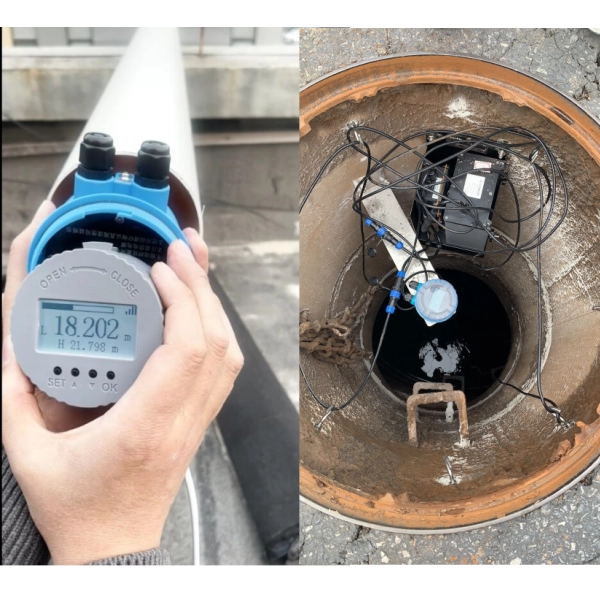
In the ever-evolving landscape of industrial automation and process control, the relevance of monitoring and regulating numerous specifications such as liquid degrees, flow rates, and pressure can not be overemphasized. Technologies such as ultrasonic liquid level sensors, differential pressure (dp) transmitters, and different types of flow meters have actually emerged as essential elements for ensuring operational efficiency and safety in industries varying from water therapy to oil and gas. Ultrasonic liquid level sensors operate the principle of emitting ultrasonic waves to gauge the range to the surface of a liquid, which enables customers to maintain accurate liquid degrees, essential for avoiding overflows or lacks that can interfere with procedures. With their non-contact nature, these sensors are especially valuable for measuring levels in challenging settings, such as in huge storage tanks or when monitoring destructive liquids, thereby securing the honesty of the measurement system.
Matching the capability of level picking up, dp transmitters are essential for measuring pressure differences throughout numerous points in a system, offering crucial insights into flow rates and liquid attributes. They play a crucial role in applications such as filter monitoring or liquid level measurement where understanding the pressure drop can inform drivers of the system’s condition. The differential pressure transmitter, for circumstances, aids establish the flow rate in a pipe by determining the pressure differential across an obstruction, consequently supporting process optimization and energy effectiveness.
When it comes to fluid flow measurement, one can pick from a selection of flow meter types, each matched for certain applications and operating conditions. Inline water flow meters, for instance, are essential to countless systems as they supply real-time dimensions of fluid flow in a straightforward, direct way.
Discover ultrasonic liquid level sensor just how accurate measurement and noticing modern technologies, such as ultrasonic level sensors, differential pressure transmitters, and flow meters, play an essential duty in boosting operational efficiency and safety in industrial automation and procedure control.
An additional cutting-edge remedy for flow measurement is the clamp-on flow meter, which can be attached on the surface to a pipeline, supplying a non-invasive ways of determining flow without interrupting the system. This adaptability substantially streamlines installment and enables quick implementation in existing systems without requiring adjustments. Turbine-type flow meters supply accurate flow measurement by using revolving blades to gauge the rate of liquid passing with, serving well in applications where precision is vital.
For pressure monitoring and control, the variety of pressure transducers available makes certain that there is a suitable gadget for nearly every application imaginable. Industrial pressure transducers are developed to withstand severe environmental problems while delivering reputable pressure measurements. For specialized demands, there are vacuum pressure transducers, which supply improved accuracy in measuring low stress, and absolute pressure transducers that determine pressure about a vacuum, making them ideal in situations where exact pressure requires to be recognized, such as in vacuum systems and high-altitude applications.
Torque transducers, consisting of rotary torque sensors, are also important in applications involving rotational pressures. These devices step torque in mechanical systems, which is essential for recognizing and optimizing equipment performance. The integration of torque measurement within a broader system boosts the capability to check and regulate industrial procedures, resulting in improved performance and minimized downtime via anticipating upkeep protocols.
As we navigate with varying temperatures and stress in industrial procedures, the need for high-temperature pressure sensors ends up being evident. These specialized sensors can run in severe conditions while offering critical data to secure tools from failure. Technologies like submersible hydrostatic level transmitters are made use of in groundwater monitoring or tank farming systems, providing precise level dimensions also when fully immersed. In a similar way, guided radar level transmitters employ radar modern technology to determine the range to a liquid’s surface area, offering trustworthy level measurement regardless of temperature or pressure fluctuations, making them optimal for complicated industrial settings.
Furthermore, high-temperature gas pressure sensors are essential for processes involving gases that need to be kept an eye on for pressure in contexts such as heating system or boiler procedure. As sectors require more reliable and durable measurement solutions, the combination of numerous technologies, including guided wave radar level sensors, strengthens overall system performance by enabling extra exact and reputable data collection.
The implementation of innovative measurement devices is not full without thinking about the ins and outs entailed in their procedure and application. For example, the working principle of a rotameter, which makes use of a float that falls and rises within a conelike tube, uses insight right into flow rates by giving a straight visual indicator of flow via the placement of the float. This simplicity and directness make rotameters appropriate for low-pressure applications and small flow monitoring.
In the context of taking care of fuel degrees in industrial setups, diesel fuel tank level monitoring systems play a vital role in making sure that procedures continue to be uninterrupted while conforming with environmental laws. By incorporating level sensors and interaction modern technologies, these systems can offer real-time data transmission, thereby allowing operators to track fuel usage and forecast when refueling will certainly be required. The increasing demand for lasting methods in markets has highlighted the demand for accuracy in fuel administration, highlighting the significance of incorporating advanced monitoring innovations.
Discover flow meter supplier just how precise measurement and noticing technologies, such as ultrasonic level sensors, differential pressure transmitters, and flow meters, play a vital role in enhancing functional effectiveness and security in industrial automation and procedure control.
When seeking these advanced measurement solutions, it is essential to partner with trusted flow meter vendors, makers, and suppliers that can supply top quality tools backed by technical support. Whether you’re trying to find pressure transmitter manufacturers for accurate pressure control systems or discovering choices for magnetic flow transmitters, choosing a trustworthy supplier is fundamental to achieving the preferred result in any industrial application. The expanding market for these important devices showcases the vital duty they play in contemporary sectors, promoting both conformity and functional proficiency.
As technologies proceed to improve, understanding the subtleties of various gauging devices and just how they interconnect within a system will equip customers to make educated decisions, causing enhanced processes. Specifically, the improvement of smart pressure sensors and flow measurement devices, designed to interface with modern industrial control systems, exhibits a shift in the direction of integrated options that not only gauge but also offer workable data insights.
On the whole, the harmony in between various measurement innovations cultivates a setting for enhanced productivity and integrity. Whether via advanced sensors, cutting-edge flow meters, or precise transducers, the future of industrial measurement and control is certainly headed toward higher class and efficiency, allowing industries to meet the expanding needs of the international industry while focusing on sustainability and security. The development of these modern technologies signifies an approach smarter operations, guaranteeing not just improved performance however likewise a decrease in source consumption, underscoring a dedication to progressing both productivity and ecological responsibility. As sectors welcome these cutting-edge measurement remedies, the possibilities for improving functional circulations and securing resources come to be essentially endless.