
Walk into any modern drilling training center and you will see a generation gap. On one side are the classic classroom aids: printed well control charts, flip charts of BOP schematics, and videos that have not changed in twenty years. On the other side is a drilling emergency simulator, running full scenario drills with realistic pressures, live team communication, and instant performance scoring. That gap is closing fast, and the direction of travel is clear. Emergency training for the oil and gas industry is moving toward deeper immersion, smarter assessment, and ultimately systems that adapt to each learner. Understanding where this technology is heading matters for anyone making a purchase decision today, because a simulator is a five-to-ten-year asset.
The Curriculum of Today
Current-generation systems already offer a rich curriculum. The scenario library typically covers kick detection and well control, blowout prevention, fire response, H2S release, lost circulation, and equipment failure drills. Each scenario is built from real incident data and follows industry procedures, so what a student practices in the classroom matches what the crew handbook requires on the rig. Assessment is equally structured: the system records every action, compares it against the correct procedure, and produces a debrief report that instructors use to target weak points. What used to be a subjective judgment call by the instructor is now an objective, documented record of competence. Centers that adopt a drilling emergency simulator as the core of this curriculum find that audit preparation, certification records, and instructor workload all improve at once.
| Drill Category | Typical Scenarios | Assessment Focus |
|---|---|---|
| Well control | Kick detection, circulation, shut-in | Decision timing and sequence |
| Blowout response | BOP actuation, diverter, evacuation | Procedure adherence under stress |
| Fire and gas | Rig fire, H2S alarm, mustering | Crew coordination and comms |
| Equipment failure | Choke failure, pump loss, sensor fault | Diagnosis and contingency plans |
Where Virtual Reality Is Taking Over
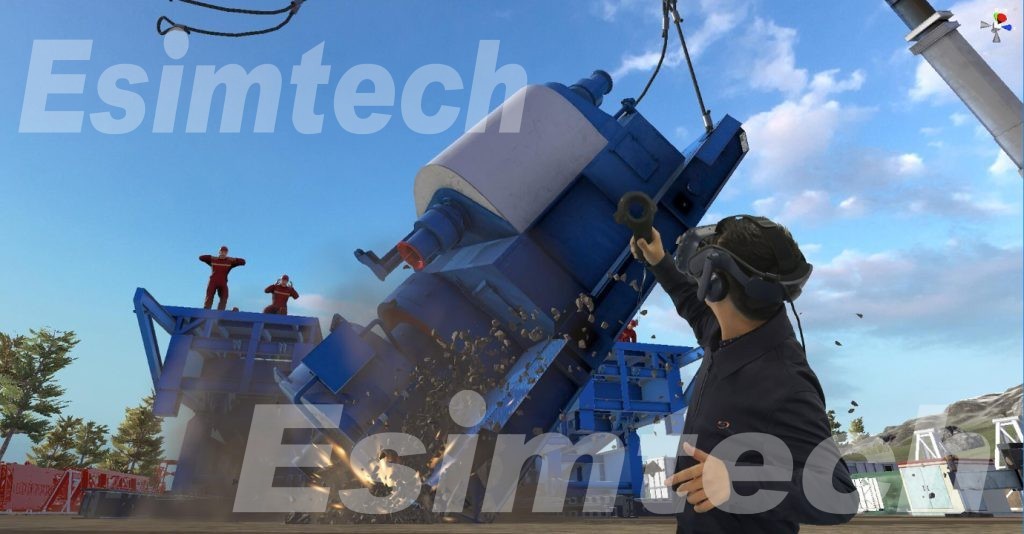
The biggest shift already visible in the classroom is the arrival of virtual reality. A virtual reality emergency training simulator takes the same scenario library and places the student inside the event, able to turn, reach, and move within a 360-degree reconstruction of the rig. The training value is measurable: spatial awareness, hand-eye coordination, and stress response are exactly the skills that flat screens cannot train but emergencies demand. Operators report that crews who complete VR drills transition more smoothly into full-mission simulator exercises and perform better in real audits. VR is not replacing the physical simulator; it is extending the skills that physical systems could never reach. The same scenario library that drives the desktop system runs inside the virtual reality emergency training simulator, so existing courses upgrade without a curriculum rewrite.
AI, Data and the Next Decade
Looking forward, the most interesting developments are happening in software rather than hardware. Artificial intelligence is beginning to power adaptive scenario engines that watch a trainee’s performance and automatically increase or decrease the difficulty, inject equipment failures at the moment of overconfidence, and generate personalized debriefs. Digital twin technology promises to let operators feed real well data and their own procedures into the simulator, turning a generic training platform into a rehearsal of the exact wells they will drill next. Remote and cloud-based training, accelerated by distributed crews and offshore rotation schedules, will make high-quality emergency drills available to crews regardless of where they are stationed. The training center of 2030 will look less like a classroom and more like a mission control room.
What Buyers Should Do Now
For training organizations planning their next investment, the practical advice is to buy a platform that can grow with these trends rather than a closed system that will be obsolete in three years. Look for modular scenario editors, open data export, VR-ready architecture, and a vendor committed to regular software updates. The hardware you choose today should be powerful enough to run the software of tomorrow, because the upgrade path matters more than the starting point. Buy the curriculum platform; rent the inevitable upgrades.
The future of emergency training is not a single technology but a convergence: scenario-based simulation, virtual reality immersion, AI-driven adaptation, and real operational data all feeding one system. Institutions that choose a drilling emergency simulator built on an open, upgradable architecture will find themselves ready for each wave of change. Those that bet on static, closed systems will discover that in training, as in drilling, the cost of standing still is always higher than the cost of moving forward.